What Is the WalshDoc Biotype Quiz?
The WalshDoc Biotype Quiz is a simple symptom-based screening tool designed to help identify which of five major biochemical pattern areas may be most relevant to you. These five areas are undermethylation, overmethylation, copper overload, pyroluria, and toxic burden / metabolic stress.
The goal is not to diagnose a condition from a quiz alone. The goal is to organize symptom patterns in a way that can guide the next step: a more complete questionnaire, lab review when appropriate, and clinician-guided interpretation.
The 5 Biotypes We Screen For
Undermethylation
Often associated with patterns such as rumination, perfectionism, inner tension, obsessive tendencies, low motivation, seasonal changes, or methylation-related lab findings.
Overmethylation
Often considered when patients report sensitivity, anxiety, sleep disruption, attention symptoms, or adverse reactions to methyl-support nutrients.
Copper Overload
May be relevant when symptoms suggest copper/zinc imbalance, emotional intensity, anxiety, panic, irritability, estrogen sensitivity, or dopamine-to-norepinephrine imbalance patterns.
Pyroluria
Often considered when stress intolerance, inner tension, poor dream recall, social withdrawal, morning nausea, or zinc and B6-related patterns are present.
Toxic Burden / Metabolic Stress
WalshDoc also screens for environmental burden, mitochondrial strain, glutathione demand, digestive stress, inflammatory load, and other metabolic stress patterns.
Biotype, Epigenetics, and “Ground Zero” Biochemistry
Your biotype is not a personality type. It is a way of describing how the DNA you were born with appears to express itself through your unique biochemistry — including methylation, copper/zinc balance, nutrient status, oxidative stress, toxic burden, and metabolic function.
You cannot change the DNA you inherited, but the way genes are expressed can be influenced by nutrition, environment, inflammation, stress, toxins, and other biochemical signals. This is the basic idea behind epigenetics.
WalshDoc is designed to look for “ground zero” biochemical issues rather than guessing from symptoms alone. These may include nutrient deficiencies, copper/zinc imbalance, methylation patterns, pyroluria-related stress vulnerability, toxic burden, or metabolic stress. The goal is to identify the pattern more precisely so nutrition and supplement strategies can be better matched to the person.
How WalshDoc Personalizes Recommendations
Questionnaire results can be reviewed alongside clinical history, optional laboratory data, and clinician judgment. When appropriate, WalshDoc can help guide a supplement strategy based on individual biochemistry and the actual body weight of the patient. This allows dosing to be more personalized rather than generic.
Do I Need Labs?
Some patients begin with questionnaire screening alone, while others choose to add laboratory testing. Relevant labs may include zinc, copper, ceruloplasmin, whole blood histamine, homocysteine, vitamin D, pyrrole testing, methylation markers such as SAM and SAH, CBC, CMP, and other tests when clinically appropriate.
Frequently Asked Questions
Is this a diagnosis?
No. The quiz is educational and screening-oriented. It helps organize symptoms into pattern areas, but it does not replace medical diagnosis or clinician review.
What happens after I submit?
Your questionnaire is queued for review. WalshDoc is designed so reports are not simply released as instant automated results without appropriate review.
Are supplement doses personalized?
When supplement strategy is included, WalshDoc is designed to consider biochemistry, symptom pattern, lab context when available, and actual body weight.
Is this just a personality test or supplement fad?
No. The biotype quiz is not meant to label your personality. It is a simplified entry point into a biochemical model. WalshDoc looks for “ground zero” nutrient and metabolic issues that may influence mood, behavior, stress tolerance, and metabolism.
What does epigenetics have to do with biotypes?
Epigenetics refers to the way genes are expressed without changing the DNA sequence itself. Nutrients, toxins, stress, inflammation, and metabolism can influence these expression patterns. WalshDoc uses the biotype framework to help organize those biochemical clues.
Does this replace my doctor?
No. WalshDoc does not replace primary care, urgent care, emergency care, or medication management by your treating clinician.
Ready to see which biotype area you most resemble?
Start with the consent page, then complete the comprehensive questionnaire. Your answers will be organized around the five WalshDoc biotype areas and queued for clinician review.
Start the Simple Quiz
Learn More First
This quiz is educational and not a diagnosis. Labs and clinician review help clarify the picture. Do not use WalshDoc for emergency symptoms.
 About
Science
For Clinicians
Resources
Sign In
Start the Quiz
Learn How It Works
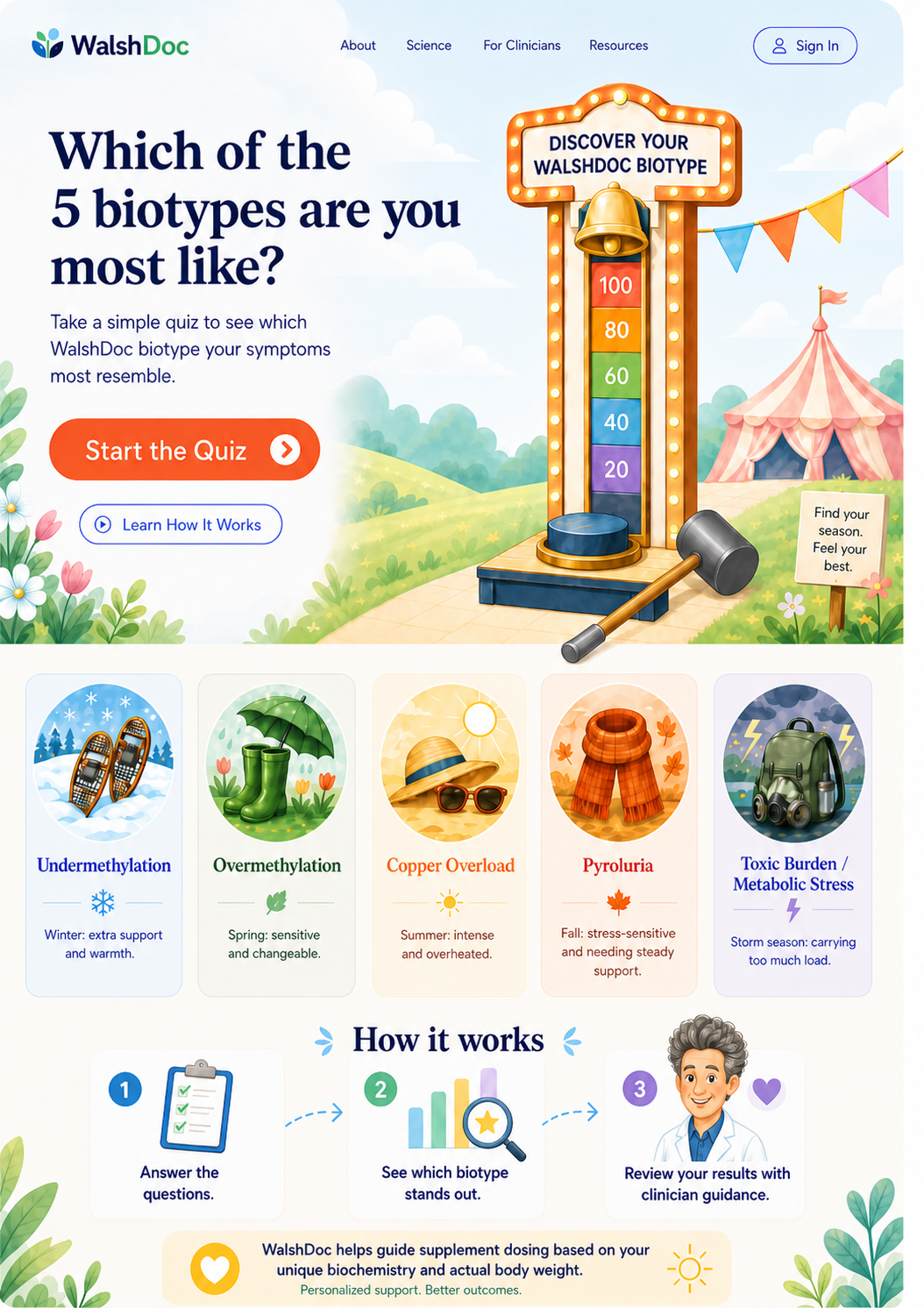
Undermethylation
Overmethylation
Copper Overload
Pyroluria
Toxic Burden
Answer the questions
See which biotype stands out
Clinician guidance
Supplement dosing based on biochemistry and body weight
About
Science
For Clinicians
Resources
Sign In
Start the Quiz
Learn How It Works
Undermethylation
Overmethylation
Copper Overload
Pyroluria
Toxic Burden
Answer the questions
See which biotype stands out
Clinician guidance
Supplement dosing based on biochemistry and body weight